
Bradwell Silver Band
The Origins of Brass Band
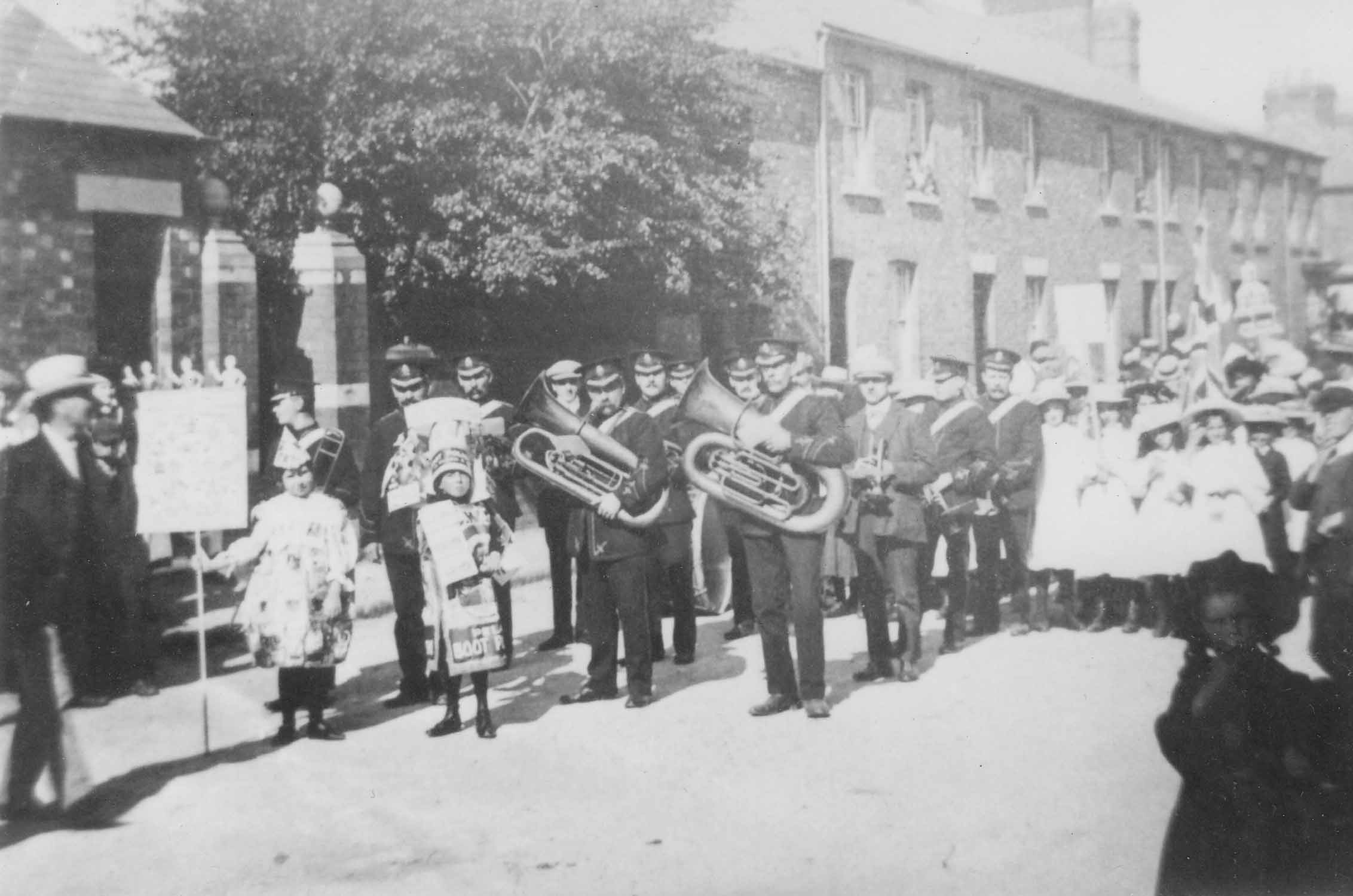


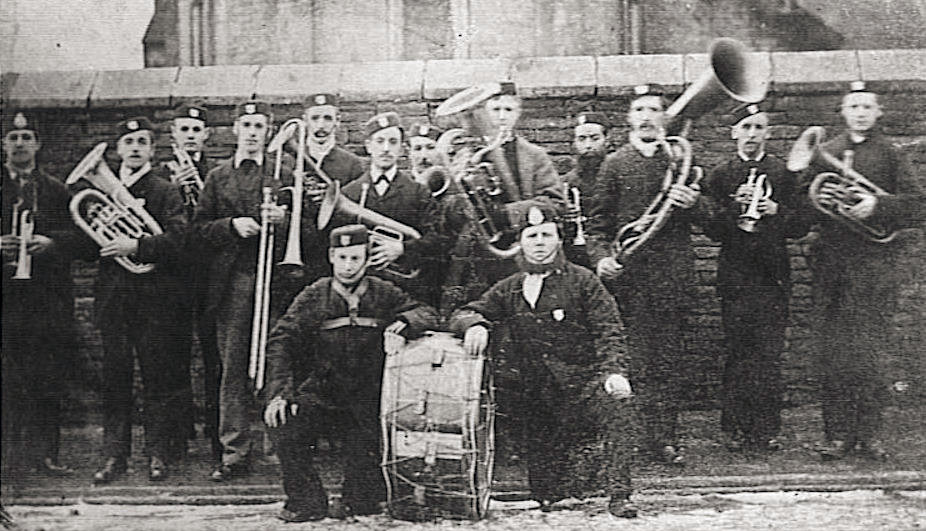


Where did Brass Banding start?
There is a long history of musical bands within communities. From medieval times many towns had bands of “Waits”, musicians paid by town councils or trade guilds to play on civic occasions. In the 18th century, before church organs became common, there were also church bands who would play at services to accompany the hymn singing. The instruments would be a mix of whatever was available or people could play. Military bands also developed during the 18th century, growing out of the fifes and drums and bugles to include a range of wind instruments. The first fully brass bands in Britain appeared as military bands in the 1820s while the first civilian brass band is believed to have formed around 1830, though the instruments would probably have been quite different from many of the ones used today.
During the course of the 19th century three different elements came together.
- First of all there was an increase in the pool of available musicians. The end of the Napoleonic Wars in 1815 released a large number of ex-soldiers, including military musicians, back into civilian life. Forming bands and teaching others to play would have been a way of earning or supplementing their income. The Militia Act in 1852 and the Caldwell Army reforms in the 1870s strengthened the militia/volunteer structure to form a more effective reserve. These units also had their bands which in turn increased the opportunities for people to gain experience of playing instruments as they moved in and out of military service.
- The second development was the industrial improvements in tooling and manufacture. The demand for more efficient wind instruments led to various innovations including the development of a family of three-valve brass instruments which was displayed and demonstrated at the Great Exhibition in 1851. Furthermore, industrialisation and an increased availability of the raw materials needed, meant that the instruments could be made more cheaply and in greater numbers. As the market grew further innovations improved the system and introduced new instruments into the early 20th
- The third element was social change. Through the latter half of the 19th century there was increasing interest in social improvement and reform. Changes in employment legislation increased the leisure time for workers and led mine and factory owners to fund bands based on the new brass instruments to provide some constructive recreational activity for the workforce as well as promoting a sense of community and pride. In many towns this idea of civic pride also led local merchants and dignitaries to finance town bands. Various temperance and church movements also formed bands to promote their message, most notably the Salvation Army, founded in 1868.
By 1895 there were over 5,000 brass bands across the United Kingdom. So common were brass bands that a reporter for the Buckinghamshire Advertiser & Aylesbury News, on seeing a Drum & Fife band in Aylesbury, commented that it provided “. . . a pleasing variety of tone and colour to the now all-predominating brass bands” [Buckinghamshire Advertiser & Aylesbury News 2nd September 1899].
Bradwell Siver Band, or Bradwell United Brass Band as it was originally called, was formed in January 1901 and was initially funded by donations and subscriptions from local dignitaries and tradespeople. As a result, in its early years at least, it had both playing and non-playing members.
There were already a number of brass bands in the area, notably the 1st Bucks Rifle Volunteers Band and the Wolverton Carriage Works Band. The McCorquodale’s Printing Works Band, Wolverton St Mary’s Band, Wolverton Wesleyan Mission Band and the Stantonbury Brass Band are also mentioned as being active in the 1890s and may still have been in existence in 1901. There is also a passing reference in a newspaper report on the formation of the band [Wolverton Express, 4th December 1901] to some previous bands in Bradwell. It is possible that the title Bradwell United Brass Band was chosen as a way of showing that it was bringing together players from these previous bands.
In 1919 the band changed its name to Bradwell United Silver Prize Band, probably to reflect that its instruments were all silver plated. Over the subsequent years various shortenings of the name were used, and in 1954 the name was formally changed again to Bradwell Silver Band.
Chas Leslie, Band Archivist
DID YOU KNOW? Brass Band or Silver Band? – there is no difference between them as far as the instruments are concerned. It is simply the colour of the finish, and whether the brass metal has been electro-plated with silver. This was an expensive process when it first became available for instruments, and “silver bands” were very proud of their new instruments, which indicated that the band was financially strong.
Sources
- IBEW Brass Bands Historical resources: http://www.ibew.org.uk/index.html
- Brass Bands of the British Isles a historical directory Gavin Holman 1st edition, March 2018
- British Military Music and the Legacy of the Napoleonic Wars. Eamonn O’Keeffe, The Historical Journal (2024), 1–26