
Bradwell Silver Band
Brass Band Instruments
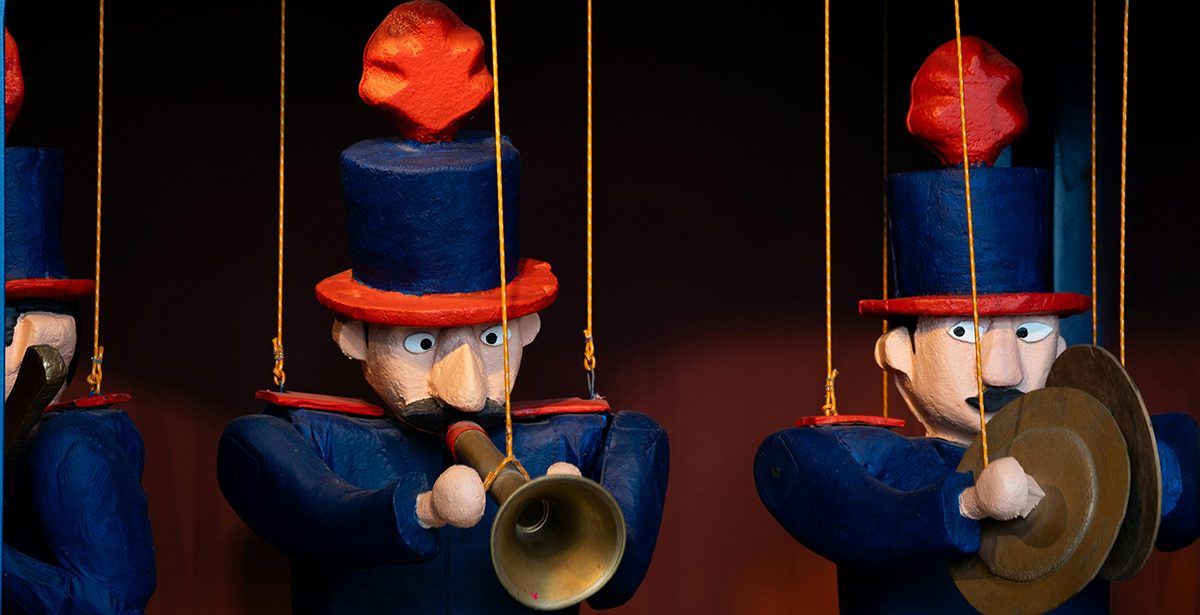
This information about the instruments in a brass band is courtesy of St Albans City Band: [https://stalbansband.co.uk/index.php/an-introduction-to-british-brass-band-instruments/]. It is reproduced here with their permission.
DID YOU KNOW? The fingering for valved brass instruments is the same throughout the band. This means that you can start on a cornet and, fairly easily, move on to play a horn, flugelhorn or even a bass. Though there will be an adjustment to your embouchure (what you do with your mouth and lips), the fingering will be the same. The exception is the trombone which has a slide and no valves.
Soprano Cornet
The smallest instrument in the band and can play the highest pitch. There is only one in each brass band and their part is often decorative, floating above the main tune in the cornets.
Cornet
Lots of brass players start out on a Cornet, it’s a good choice for a beginner. It has a similar range to a trumpet but has a conical bore (the trumpet has straight tubing apart from the horn) and a warmer ‘rounder’ sound. In a typical brass band there will be:
- Solo Cornets (aka ‘front row’) who will typically play the tune. The Principal Cornet (the first of the solo cornets) leads the band in a similar way to the Principal Violin in an orchestra.
- Repiano Cornet (aka ‘rep’) who will often have a counter-melody.
- Second Cornets and Third Cornets who will play tune and harmonies.
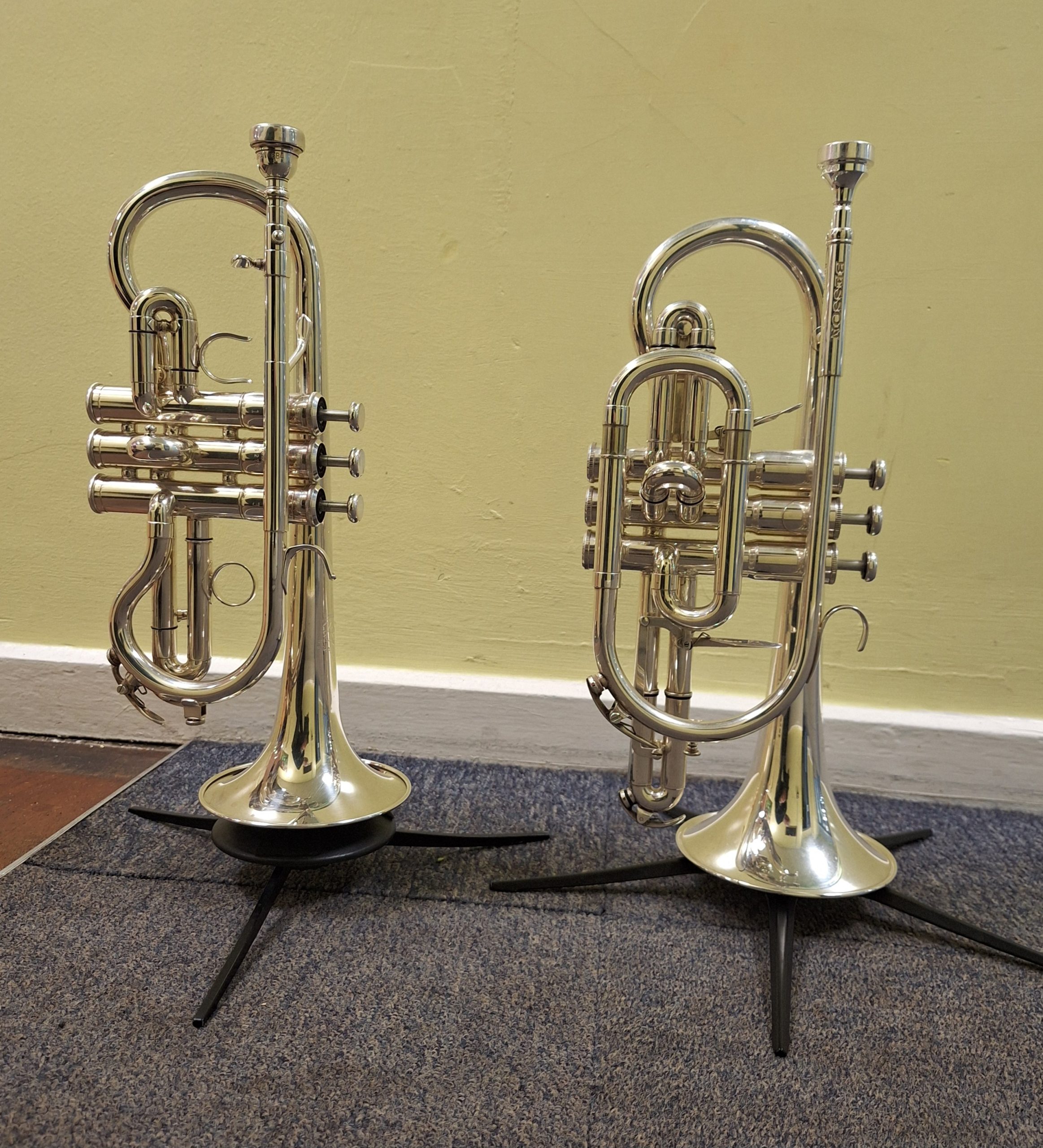
DID YOU KNOW? The cornet evolved in the 1820s from the continental post horn (cornet-de-poste, which is circular in shape like a small French horn). One of the first makers was the Parisian Jean Asté, known as Halary, in 1828.
Flugelhorn
The Flugel is a member of the Horn section. There is only one Flugel in each band. It is shaped with a forward-facing bell (like a Cornet) but is larger and more conical. The sound is very warm and distinctive.
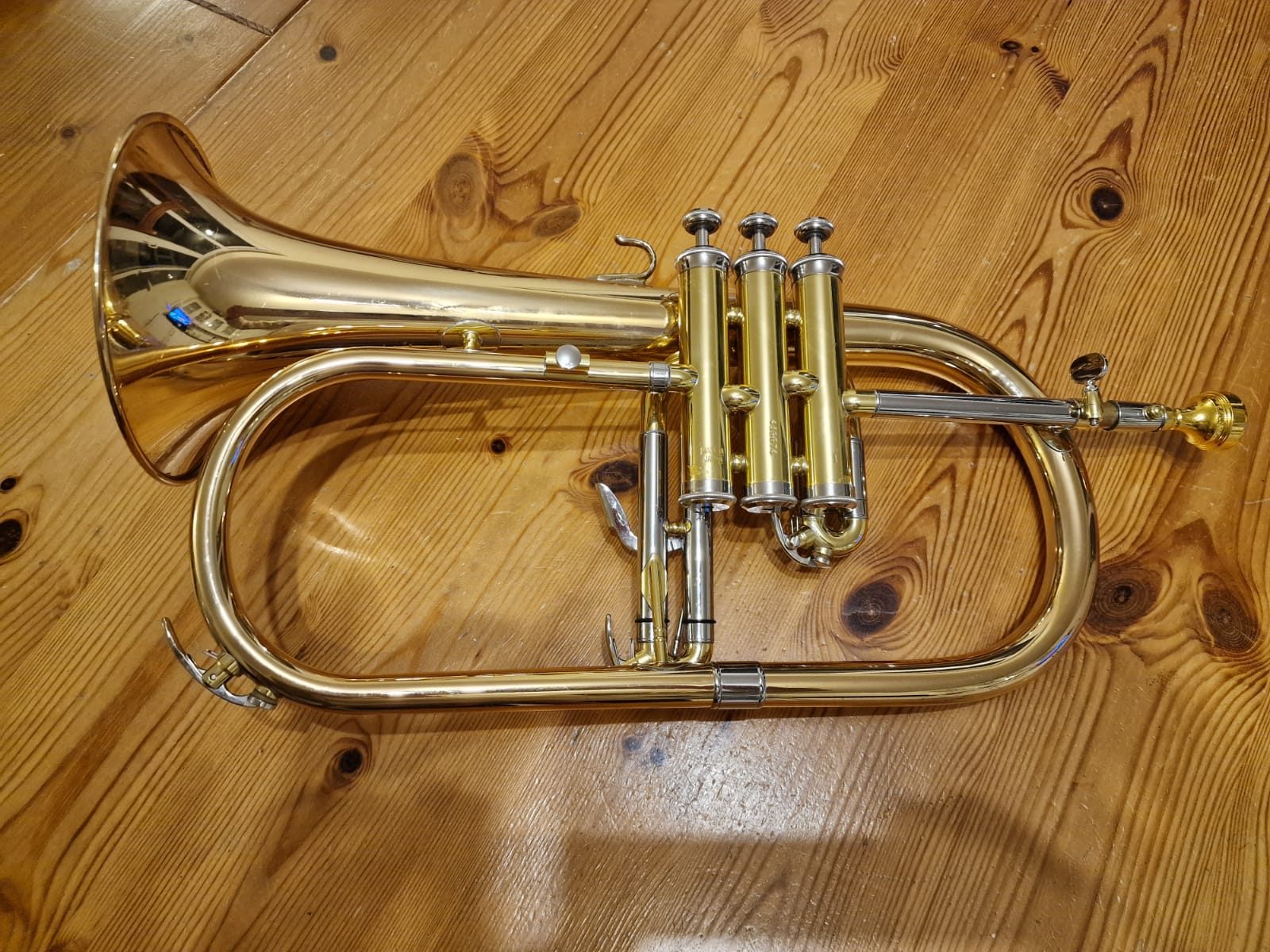
DID YOU KNOW? The flugelhorn is based on the military bugle which was introduced to Britian in the mid-18th century after George, the Elector of Hanover, became King. The name flugel horn may come from the German word meaning “wing” deriving from the flugelman, the player who marched on the wing or flank of the front rank in German and Austrian bands at that time. The instrument is also often mentioned in connection with hunting, being used by the huntsman whose duty it was to watch in the flugeln, or paths cut through the wood, and give a signal on the approach of game.
Tenor Horn
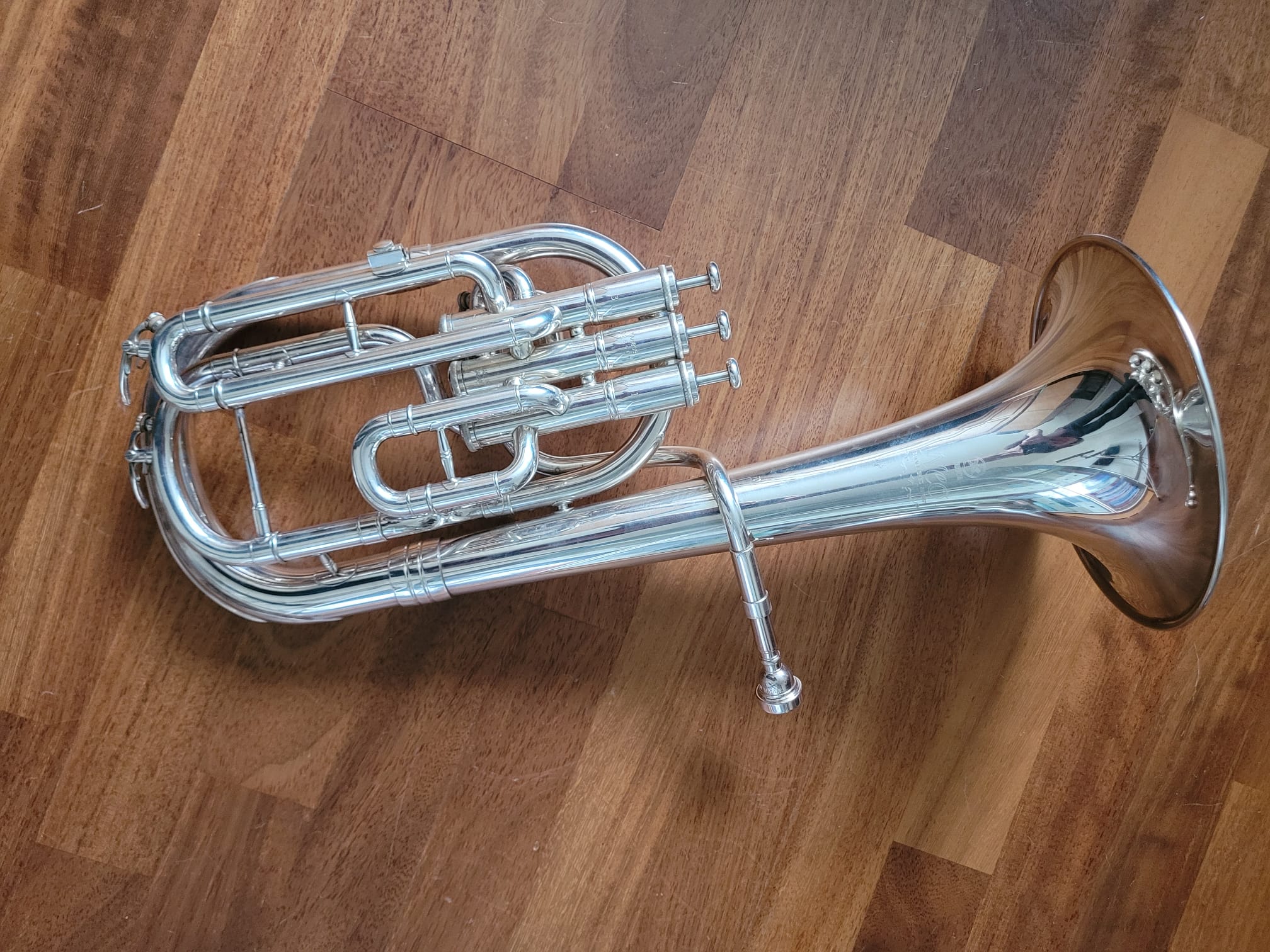
This is a very different instrument to the French Horn used in Orchestral music. It has an upward facing bell and is another popular instrument for beginners. There are three Tenor Horn parts in a Brass band –
- Solo Horn, which can often have the tune,
- 1st Horn and 2nd Horn. will often play accompanying harmonies.
Baritone Horn
The Baritone is a similar shape to the Tenor Horn, but slightly larger. There are two Baritone parts in a brass band. It’s an interesting part sometimes supporting a tune on Euphonium, sometimes filling out the harmony parts with the Horns.
- 1st Baritone may have solos.
- 2nd Baritone part will fill out the harmonies in the chord.
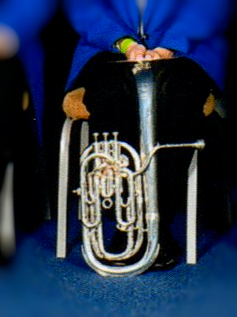
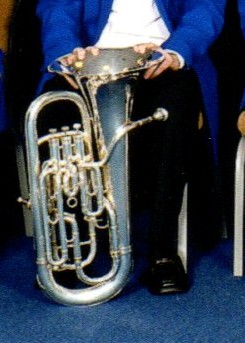
Euphonium
The Solo / First Euphonium is the leader of the Bass part of the band and sits opposite the principal cornet. A brass band also has a Second Euphonium part who mostly plays the same part. The Euphonium has a beautiful rich sound and an enormous range.
Trombone
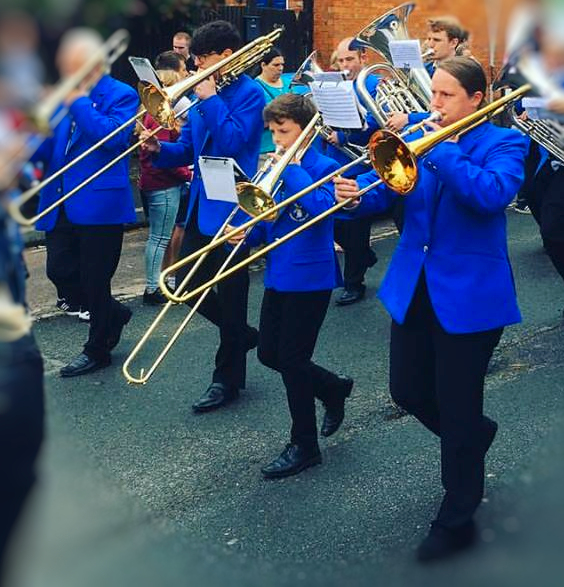
Trombones have no valves and instead use a slide to adjust the pitch of the note along with adjustments to the player’s embouchure [so one slide position can produce several notes]. There are two types of Trombones in a Brass Band,
- Tenor Trombone [usually two] The 1st Tenor Trombone will sometimes have the tune.
-
And a Bass Trombone.
Trombones are an important and powerful voice at the bass end of the band. Trombones are another popular beginner instrument.
DID YOU KNOW? The word “trombone” derives from Italian tromba (trumpet) and -one (a suffix meaning “large”), so the name means “large trumpet”. During the Renaissance, the equivalent English term was “sackbut”. The sackbut appeared in the 15th century and was used extensively across Europe, declining in most places by the mid to late 17th century. The modern trombone developed from these instruments.
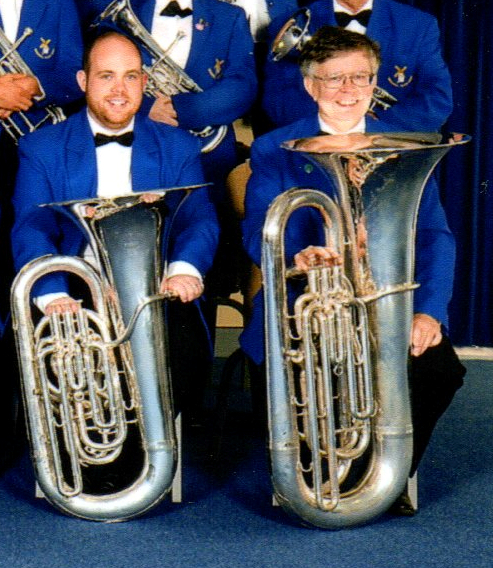
Bass (aka Tuba)
There are two types of Bass in a Brass Band, an Eb Bass and a Bb Bass. The Bb is the largest and lowest pitched instrument in the band. The Bass section will carry the bassline which plays a vital part in holding together the ensemble and providing a rhythmic drive for the music.
Percussion
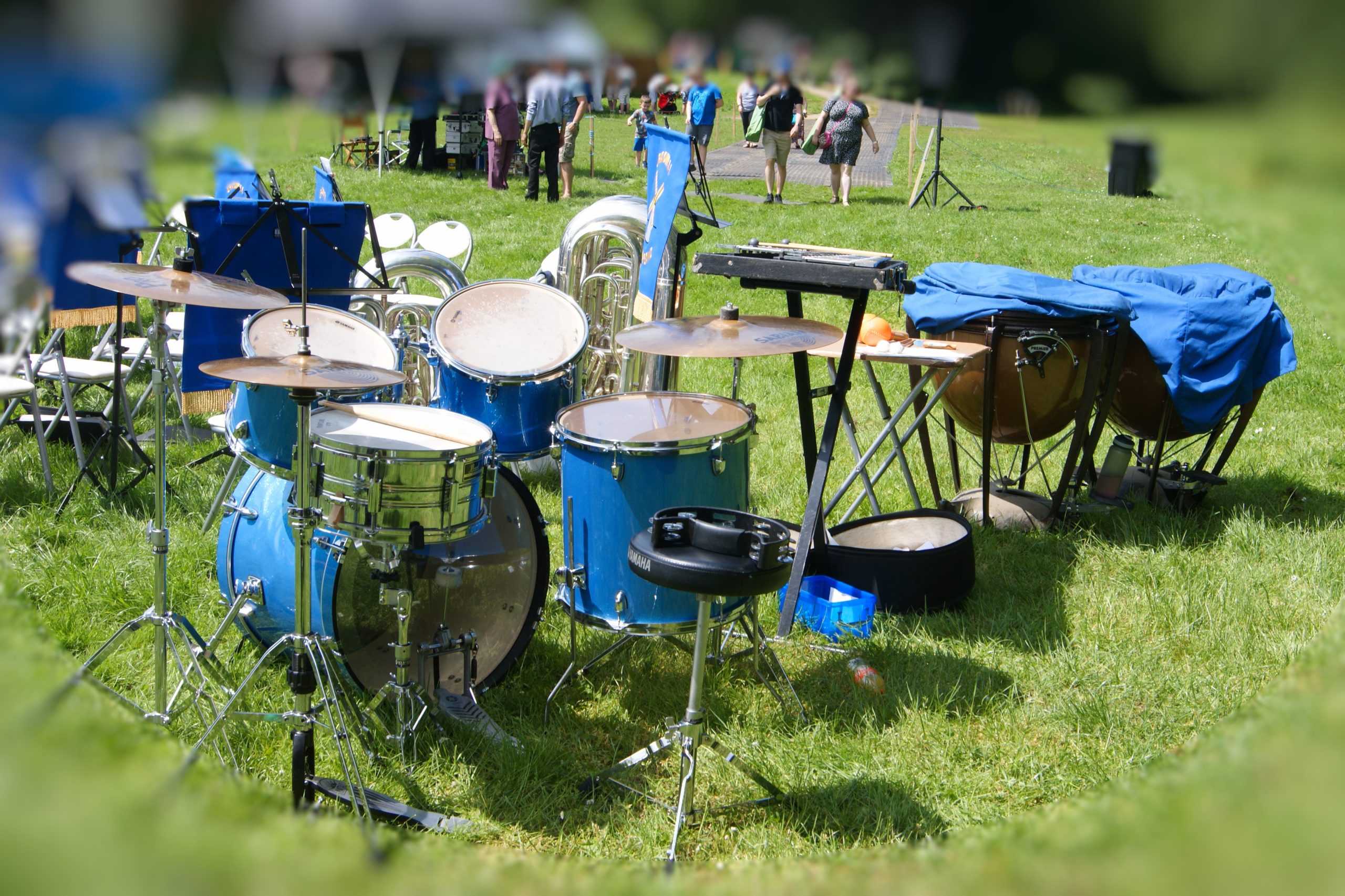
Brass band music can require a whole team of percussionists. It covers a wide range of instruments from drum kits and timpani, to cymbals and tubular bells, to tambourines and cowbells. Parts are written in the same way as Orchestral percussion music.
Typical Brass Band Seating Plan
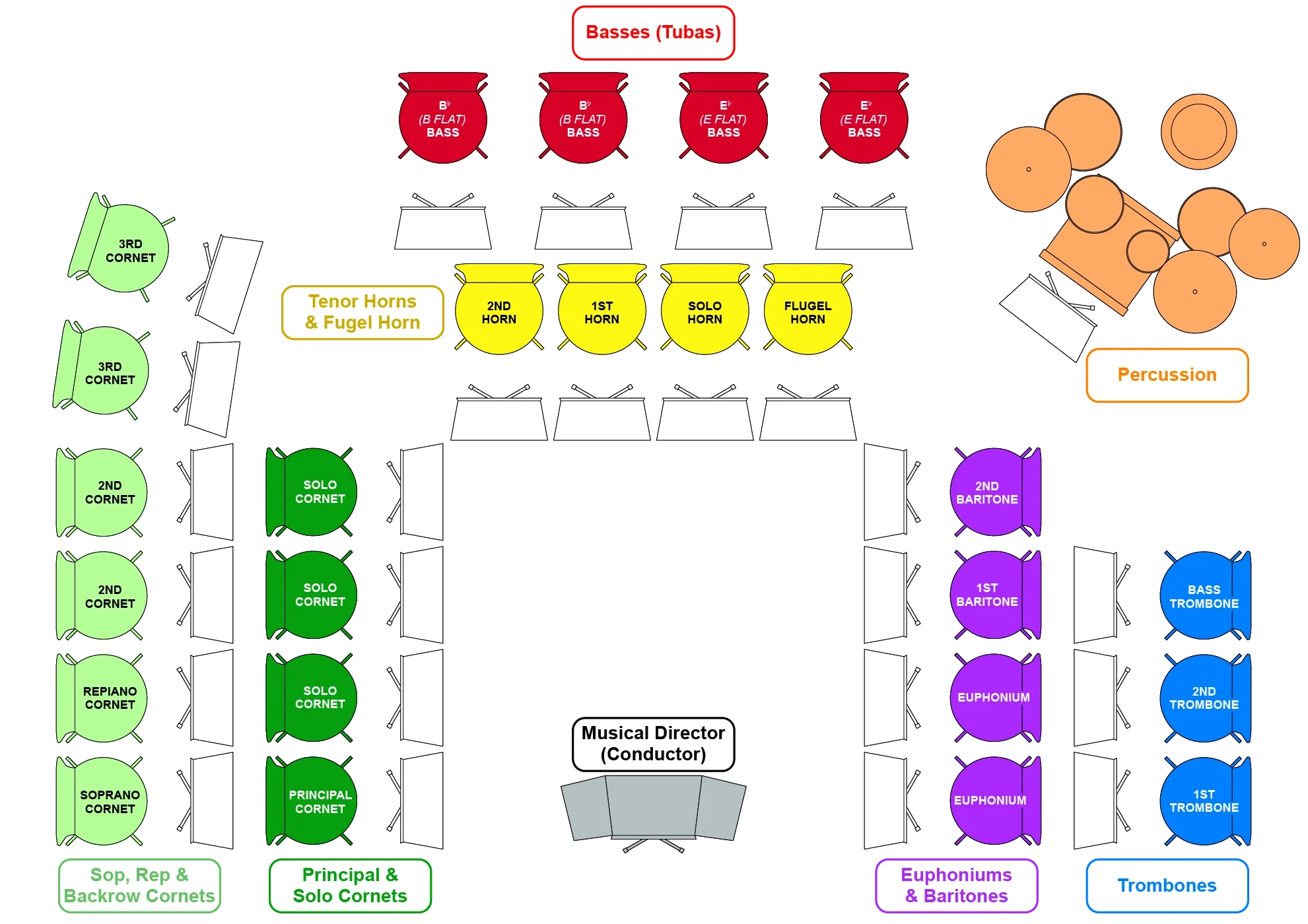
A typical Brass Band would consist of:
The Conductor
1 x Soprano Cornet (E♭)
9 x Cornets (B♭)
[Front row]: one principal cornet, three solo cornets
[Back row]: one Repiano cornet, two 2nd cornets, two 3rd cornets
1 x Flugelhorn (B♭)
3 x Tenor horns (E♭) – solo, 1st, 2nd parts
2 x Baritone horns (B♭) – 1st, 2nd
2 x Euphoniums (B♭)
2 x Tenor trombones (B♭) – 1st, 2nd
1 x Bass trombone (B♭)
2 x E♭ basses, also known as E♭ tubas
2 x B♭ basses, also known as B♭ tubas
Up to 4 percussionists
*The actual placing of the percussion may vary depending upon the number of players involved and the space available